


Quotes by
Peter Drucker |
1909–2005 , Austrian management guru
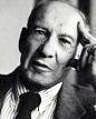 Austrian-born American management consultant, educator, and author, whose writings contributed to the philosophical and practical foundations of the modern business corporation. He was also a leader in the development of management education, and he invented the concept known as “management by objectives”.
He has been described as the “founder of modern management”.
| 58 quotes | 5,777 visits |
Quotations
| • | Management is doing things right; leadership is doing the right things. 10 |
| • | Ideas are like frog eggs: you've got to lay a thousand to hatch one. 8 |
| • | A man should never be appointed into a managerial position if his vision focuses on people's weaknesses rather than on their strengths. 7 |
| • | What gets measured gets managed. 7 |
| • | Only three things happen naturally in organizations: friction, confusion, and underperformance. Everything else requires leadership. 7 |
| • | The best way to predict your future is to create it. 7 |
| • | Whenever anything is being accomplished, it is being done, I have learned, by a monomaniac with a mission. 6 |
| • | Production is not the application of tools to materials, but logic to work. 6 |
| • | There is a point of complexity beyond which a business is no longer manageable. 5 |
| • | We do not need more laws. No country suffers from a shortage of laws. We need a new model. 5 |
| • | The better a man is, the more mistakes will he make - for the more new things he will try. I would never promote a man into a top level job who had not made mistakes, and big ones at that. 5 |
| • | The greatest danger in times of turbulence is not the turbulence; it is to act with yesterday's logic. 5 |
| • | A decision without an alternative is a desperate gambler’s throw. 5 |
| • | Until we can manage time, we can manage nothing else. 5 |
| • | The most important thing in communication is to hear what isn't being said. 5 |
| • | One has to make a decision when a condition is likely to degenerate if nothing is done. 4 |
| • | Whenever you see a successful business, someone once made a courageous decision. 4 |
| • | History has been written not by the most talented but by the most motivated. 4 |
| • | Profit is not the purpose of a business, but rather the test of its validity. 4 |
| • | In todays economy, the most important resource is no longer labor, capital or land; it is knowledge 4 |
| • | If you have more than five goals, you have none. 4 |
| • | Mission defines strategy, and strategy defines structure. 4 |
| • | Culture eats strategy for breakfast. 4 |
| • | The one man to distrust, however, is the man who never makes a mistake, never commits a blunder, never fails in what he tries to do. He is either a phony, or he stays with the safe, the tried, and the trivial. 4 |
| • | Rank does not confer privilege or give power. It imposes responsibility. 4 |
| • | There is nothing quite so useless, as doing with great efficiency, something that should not be done at all. 4 |
| • | The world political system is till based on the concept of the national sovereign state. For the first time therefore, in three hundred years economy and sovereignty are becoming divorced from each other. 3 |
| • | The first organization structure in the modern West was laid down in the canon law of the Catholic Church eight hundred years ago. 3 |
| • | The society of organizations is new; only seventy years ago employees were a small minority in every society. 3 |
| • | The basic definition of the business and of its purpose and mission have to be translated into objectives. 3 |
| • | Success always obsoletes the very behavior that achieved it. 3 |
| • | The only thing we know about the future is that it is going to be different. 3 |
| • | A management decision is irresponsible if it risks disaster this year for the sake of a grandiose future. 3 |
| • | Large organizations cannot be versatile. A large organization is effective through its mass rather than through its agility. Fleas can jump many times their own height, but not an elephant. 3 |
| • | Morale in an organization does not mean that “people get along together”; the test is performance not conformance. 3 |
| • | Throughout the ages to be educated meant to be unproductive.... our word “school” - and its equivalent in all European languages - derives from a Greek word meaning “leisure.” 3 |
| • | A manager sets objectives. A manager organizes. A manager motivates and communicates. A manager, by establishing yardsticks, measures. A manager develops people. 3 |
| • | Free enterprise cannot be justified as being good for business. It can be justified only as being good for society 3 |
| • | There is only one valid definition of a business purpose: to create a customer. 3 |
| • | Unless commitment is made, there are only promises and hopes; but no plans. 3 |
| • | There are no creeds in mathematics. 3 |
| • | Focus on opportunities, not problems. 3 |
| • | Once the facts are clear, the decisions jump out at you. 3 |
| • | If there is any one secret of effectiveness, it is concentration. Effective executives do first things first and they do one thing at a time. 3 |
| • | The only real difference between one organization and another is the performance of its people. 3 |
| • | The purpose of information is not knowledge. It is being able to take the right action. 3 |
| • | Marketing is not a function, it is the whole business seen from the customer's point of view. 3 |
| • | Entrepreneurship is neither a science nor an art. It is a practice. 3 |
| • | 1. What is our mission? 2. Who is our customer? 3. What does the customer value? 4. What are our results? 5. What is our plan? 3 |
| • | Strategy is a commodity, execution is an art. 3 |
| • | The most serious mistakes are not being made as a result of wrong answers. The true dangerous thing is asking the wrong question. 3 |
| • | People in any organization are always attached to the obsolete - the things that should have worked but did not, the things that once were productive and no longer are. 3 |
| • | Plans are only good intentions unless they immediately degenerate into hard work. 3 |
| • | Your first and foremost job as a leader is to take charge of your own energy and then help to orchestrate the energy of those around you. 3 |
| • | Results are obtained by exploiting opportunities, not by solving problems. 3 |
| • | Business has only two functions: marketing and innovation. 3 |
| • | Efficiency is doing the thing right. Effectiveness is doing the right thing. 3 |
Personal Stories
| • | Here I am, fifty-eight, and I still don't know what I'm going to be when I grow up. 4 |
