Quotes by
Homer |
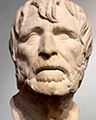
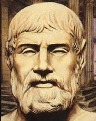
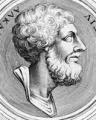
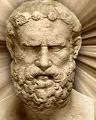
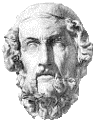 Homer is the name ascribed by the Ancient Greeks to the semi-legendary author of the two epic poems, the Iliad and the Odyssey, the central works of Greek literature.
The poems were composed at some point around the late eighth or early seventh century B.C.
The influence of the Homeric epics on Western civilization has been incalculably vast, inspiring many of its most famous works of literature, music, and visual art.
| 34 quotes | 8,628 visits |
Ancient Greek
| • | The day will come… Έσσετ’ ήμαρ… — Iliad IV 23 |
| • | Smiling through tears. Δακρυόεν γελάσασα. (of Andromache) — Iliad VI 22 |
| • | ...of Sleep and Death, who are twin brothers. …Ύπνω και Θανάτω διδυμάοσιν. — Iliad XVI 16 |
| • | Welcome words on their lips, and murder in their hearts. Έσθλ' αγορεύοντες, κακά δε φρεσί βυσσοδόμευον. — Odyssey XVII 14 |
| • | Ever to excel. Αιέν αριστεύειν. — Iliad VI 12 |
| • | Nobody is my name. Ούτις εμοί γ' όνομα. — Odyssey IX 11 |
| • | Once a thing has been done, even the fool sees it. Ρεχθέν δε τε νήπιος έγνω. — Iliad XVII 11 |
| • | Many cities of men he saw and learned their minds. Πολλών δ’ ανθρώπων ίδεν άστεα και νόον έγνων. — Odyssey I 11 |
| • | Gods know all things. Θεοὶ δε τε πάντα ίσασιν. — Odyssey IV 10 |
| • | My return home is lost, but my glory will never die. Ώλετο μεν μοι νόστος, ατάρ κλέος άφθιτον έστα. — Iliad IX 9 |
| • | And you, old man, we are told you prospered once. Και σε γέρον το πριν μεν ακούομεν όλβιον είναι. (Achilles to Priam) — Iliad XXIV 8 |
| • | Each man delights in the work that suits him best. Άλλοις γαρ τ’ άλλοισιν ανήρ επιτέρπεται έργοις. — Odyssey XIV 8 |
| • | The courageous man is the best in everything. Θαρσαλέος ανήρ εν πάσιν αμείνων. — Odyssey VIII 8 |
| • | We can never trust women again. Επεὶ ουκέτι πιστά γυναιξίν. — Odyssey XI 7 |
| • | Sleep, universal king of gods and men. Ύπνε άναξ πάντων τε θεών πάντων τ' ανθρώπων. — Iliad XIV 7 |
| • | Breathing fury. Μένεα πνείοντες. — Iliad II 7 |
| • | When a man is exhausted, wine will build his strength. Ανδρί δε κεκμηώτι μένος μέγα οίνος αέξει. — Iliad VI 7 |
| • | Timidity is not good for a man in need. Αιδώς δ’ ουκ αγαθή κεχρημένω ανδρί παρείναι. — Odyssey XVII 7 |
| • | What is this word that broke through the fence of your teeth? Ποίον σε έπος φύγεν έρκος οδόντων; — Iliad IV 7 |
| • | Dreams come from Zeus. Και γαρ τ' όναρ εκ Διός εστιν. — Iliad I 6 |
| • | As ever, god brings like and like together! Ως αεί τον όμοιον άγει θεός ως τον όμοιον. — Odyssey XVII 6 |
| • | This is the best omen, to fight for your country. Είς οιωνός άριστος, αμύνεσθαι περί πάτρης. (words of Hector) — Iliad XII 6 |
| • | These things surely lie on the knees of the gods. Ταύτα θεών εν γούνασι κείται. — Odyssey I 5 |
| • | Sing to me of the man, Muse, the man of twists and turns driven time and again off course, once he had plundered the hallowed heights of Troy. Άνδρα μοι έννεπε, Μούσα, πολύτροπον, ός μάλα πολλά — Odyssey I 5 |
| • | But Zeus does not bring to accomplishment all thoughts in men's minds. Αλλ' ου Ζεὺς άνδρεσσι νοήματα πάντα τελευτά. 5 |
| • | Anger inflates the mind. Χόλος νόον οιδάνει. — Iliad X 5 |
| • | Just take in peace what gifts the gods will send. Αλλ' ό γε σιγῇ δώρα θεών έχοι, όττι διδοίεν. — Odyssey XVIII 4 |
| • | All men need the gods. Πάντες δὲ θεών χατέουσ' άνθρωποι. — Odyssey III 4 |
| • | A physician is worth more than several other men put together. Ιητρὸς γαρ ανήρ πολλών αντάξιος άλλων. — Iliad XI 4 |
| • | Many leaders is not a good thing. Let there be one ruler, one king. Ουκ αγαθόν πολυκοιρανίη. Είς κοίρανος έστω, είς βασιλεύς. — Iliad II 4 |
| • | Modesty is of no use among the wicked. Silence is the ally of the speaker. Αιδώς γαρ εν κακοίσιν ουδέν ωφελεί. Η γαρ σιωπή τω λαλούντι σύμμαχος. 4 |
| • | Winged words. Έπεα πτερόεντα. — Iliad E’ 871 4 |
| • | From whose lips the streams of words ran sweeter than honey. Του και από γλώσσης μέλιτος γλυκίων ρέεν αυδή. (about Nestor) — Iliad I 3 |
| • | There is nothing sweeter than one's homeland and parents. Ως ουδέν γλύκιον ής πατρίδος ουδέ τοκήων γίνεται. 1 |